




• Nvis Technology
  • Nvis Technology
  • Nvis Technology
  • Nvis Technology
  • Nvis Technology
  • Nvis Technology
Nvis Technology

Head Office

141-A, Electronic complex, Pardesipura,Indore - 452010 India

Phone: +91 73899 00887 , +91 98932 70303

Email:info@nvis.scientech.co.in

Request a Quote

Looking for a quality and affordable builder for your next project?


    Nvis Technology

    Toll Free

    +91 73899 00887

    We are happy to meet you during our working hours. Please make an appointment.

    • Monday-Saturday: 9:00 AM - 5:30 PM (IST)
    • Sunday: Closed

    What is a BLDC Motor? Full Form, Working Principle, and Applications Explained

    TL;DR 

    • This blog is for engineering students, technology learners, and freshers who want to understand BLDC motors clearly from basic concept to real-world application, without prior background in electrical machines.
    • The full form of BLDC motor is Brushless DC Motor and removal of mechanical brushes is a single design change that defines everything about its superior performance.
    • Electronic commutation using Hall effect sensors or back-EMF detection replaces the role of brushes, giving motor precise rotor position awareness and smooth, efficient switching.
    • BLDC motors outperform brushed DC motors in efficiency, lifespan, and noise levels which is why they are found in electric vehicles, drones, robotics, and consumer appliances worldwide.
    • Understanding BLDC motors is foundational for anyone entering fields of embedded systems, motor control, electric vehicles, or industrial automation.

    Introduction

    The electric motor is one of the basic components in modern engineering. Motors convert electrical energy into mechanical motion, ranging from fan cooling a notebook computer to powering an electric vehicle. Brushed DC motors were the most common motors used in low-power or variable-speed applications for much of the twentieth century. Simple, cost-effective, and well-known, but with the inherent limitation of using mechanical brushes.

    Brushes wear down. They create friction. They produce electric noise. They restrict top speed and performance of the motor. But with the advent of reliable power electronics and microcontrollers, many of these compromises have been significantly reduced.

    To overcome these limitations, BLDC Motor (Brushless DC Motor) was born. The BLDC motor eliminated the root cause of the most performance and durability problems in brushed motors by replacing the mechanical commutation system with an electronic one. Today, BLDC motors are among the most widely used motor types in the world, found in applications ranging from consumer electronics to aircraft systems.

    This guide offers a step-by-step introduction to BLDC motors, covering their full form, construction, working principle, commutation methods, types, advantages, limitations, and applications.

    Also Read,

    What is a BLDC Motor?

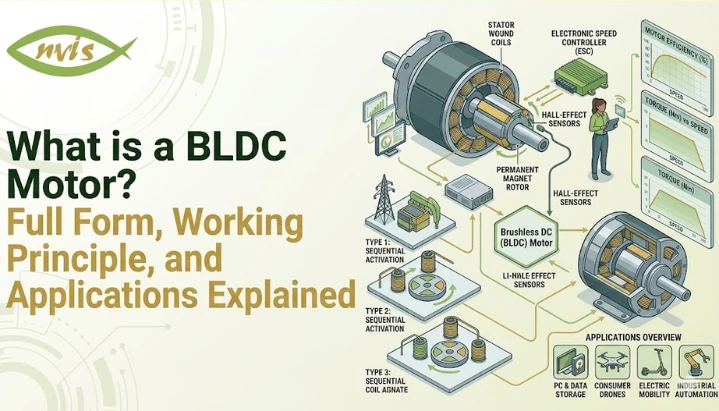
    A BLDC motor (Brushless DC Motor) is an Electronic Commutated Electric Motor that uses direct current and has no mechanical brushes and commutator.

    In a typical brushed DC motor, the current is conducted to the windings of the rotor through a rotating commutator ring with the assistance of carbon brushes. This contact allows current to flow through the rotor windings, producing a magnetic field that causes rotation. It is a working system, but using physical contact between brushes and commutators causes friction, heat, wear and sparking – all of which affect the performance and lifespan of the system over time.

    In contrast, a BLDC motor uses a different construction and commutation method. The rotor is made of permanent magnets and the stator has stationary copper windings. Current switching to the stator windings is more precisely controlled in sequence using an electronic controller instead of a mechanical brush-commutator pair. The electronically controlled switching generates a rotating magnetic field that is acted upon by the permanent magnets in the rotor to generate the rotation.

    The outcome is a motor without physical contact  between rotating and stationary components in the electrical circuit, eliminating the primary cause of wear and energy loss of brushed motors.

    BLDC Motor Full Form

    The full form of the BLDC motor is Brushless DC Motor. Each word in this name carries technical meaning:

    • A brushless motor operates without mechanical carbon brushes. Commutation is handled electronically.
    • The DC motor is powered by direct current. Internally, the electronic controller converts this into sequenced AC signals to drive stator windings.
    • A motor machine converts electrical energy into mechanical rotational energy.

    It is important to note that although BLDC stands for Brushless DC Motor, its stator windings are energized using electronically switched AC waveforms. The motor is operated from a direct current source, but the windings in its stators are driven by alternating currents which are switched in sequence by an electronic controller. In motor engineering, a BLDC motor is considered a DC motor because it operates from a DC supply, even though its stator windings are driven by electronically switched AC waveforms.

    Construction of a BLDC Motor

    A BLDC motor consists of three principal components: stator, rotor, and electronic controller.

    Stator

    A stator is a fixed outer structure of a motor. It is equipped with three-phase copper winding on a laminated steel core. When energized in a certain order, this creates a rotating magnetic field within the motor. The structure of the stator of a BLDC motor is much like that of an AC induction motor or a PMSM motor.

    The number of the stator poles affects the torque characteristic and the speed range of the motor. The more poles there are, the smoother the torque at low speeds.

    Rotor

    The rotor is the rotating part of the motor. The BLDC motor’s rotor is also equipped with permanent magnets, unlike brushed DC motors that feature windings on the rotor. The magnets are usually constructed from high energy rare earth materials like Neodymium Iron Boron (NdFeB) which offer a powerful magnetic field within a small space.

    Alternating north-south pole pairs of permanent magnets are placed around the rotor. The rotor magnets align with and follow the rotating magnetic field created by the stator, causing the rotor to rotate.

    Electronic Controller

    Unlike all mechanically commutated motors, a BLDC motor system is controlled using an electronic controller. The controller performs the same commutation function that brushes and a commutator perform in a brushed DC motor, but electronically and without any physical contact.

    The controller continually samples the rotor position either by sensors or by indirect methods and automatically switches the current in the three phases of the stator in the right sequence at the right time. This exact electronic switching is referred to as commutation, and is the essence of BLDC motor operation.

    How Does a BLDC Motor Work?

    The process of a BLDC motor operates on the principle of the interaction between the rotating magnetic field produced by the stator and the magnetic field of the permanent-magnet rotor.

    When stator phases are energized in sequence, they create a rotating magnetic field. The permanent magnets on the rotor continuously align with this field, producing rotation in the rotor toward the energized phase. Once the rotor aligns with that magnetic field, the controller will change the current to the next phase. The new field continues to be followed by the rotating rotor. The next stage is then energised and the rotor follows once more.

    By continuously switching current between the three phases of the stator, the effect is that of a rotating magnetic field, and the rotor follows the rotating magnetic field continuously, thus achieving smooth rotation.

    The timing of the switching sequence needs to be accurate to the rotor’s true position. If switching occurs too early or too late, the torque output will decrease and the motor may lose synchronisation. That is why rotor position feedback is so important to the operation of BLDC motors.

    The idea of timing requirements is similar to that of a relay race: imagine it’s a relay. The runners do not retrieve the baton at the proper times: too early or too late and the team loses its advantage. The BLDC controller does the same switching between the stator phases and uses the position of the rotors as a timing reference.

    Commutation Methods in BLDC Motors

    Commutation refers to the process of determining when and how to switch current between stator phases. In a BLDC motor, this is done electronically using one of two primary methods.

    Sensored Commutation Hall Effect Sensors

    Hall effect sensors embedded in the stator are commonly used to detect rotor position in most BLDC motors found in servo, robotics and EV applications. Three Hall sensors are typically spaced 120 electrical degrees apart. The permanent magnets, as they pass each sensor, trigger a position signal as the rotor rotates. These three signals are used by the controller to calculate the rotor position correctly with sufficient accuracy, which in turn is used to time the commutation.

    Hall sensor based commutation is reliable, gives accurate position feedback at low velocity and has a smooth motor start-up. The downside is that extra wiring, additional hardware, possible failure points and increased cost.

    Sensorless Commutation Back-EMF Detection

    As the rotor rotates, a voltage is induced in the stator winding that is not currently energized. This voltage created is known as the back-EMF or back electro-motive force. This back EMF can be sensed by the controller during the non-active phase, and it can be used to determine the position of the rotor without using any physical sensor.

    The drawback of the sensorless commutation is that the back-EMF is proportional to the rotor speed at very low speeds or standstill, making the measurement unreliable. This means that sensorless BLDC motors are not as well suited for applications that demand smooth low-speed or zero-speed operation.

    Types of BLDC Motors

    BLDC motors are classified based on their physical rotor-stator configuration.

    Inrunner BLDC Motor

    In an inrunner BLDC motor, the conventional arrangement for most electric motors is having a permanent magnet rotor inside stator windings. Inrunner motors have a compact rotor geometry and are typically used in drones, RC aircraft, and/or high-speed industrial spindles where they can achieve high rotational speeds in a short amount of time.

    Outrunner BLDC Motor

    The rotor is placed outside of the stator in an outrunner BLDC motor, with permanent magnets attached to the rotating outer housing surrounding the inner stator coils. The outrunner configuration will, of course, generate more torque at lower speeds which is the reason why this type is used in applications such as drone propellers, camera gimbals, and e-bikes wheel hubs.

    Advantages of BLDC Motors

    The change from brushed to brushless motor design is a set of consistent but significant benefits.

    Higher Efficiency: BLDC motors convert more of the electricity into mechanical energy since there is no friction in the brushes, no electrical loss in the commutator. Typical efficiencies are higher, at 85-90%, than the 75-80% for comparable brushed motors.

    Eliminating brushes removes the primary source of wear in DC motors, significantly extending operational lifespan in DC motors. The BLDC motors can run for tens of thousands of hours with little maintenance, suitable for embedded and continuous duty applications.

    In brushed DC motors, arcing between the brushes and commutator generates electrical noise and electromagnetic interference (EMI). BLDC motors generate significantly less electrical noise, particularly important in precision electronics, medical equipment, and communication devices.

    An electronic controller for the BLDC motor system can control speed and torque by high precision within a wide range of operation. This makes BLDC motors ideal for situations where repeatable and controlled motion is needed.

    High Power Density: BLDC motors deliver high power output in a compact and lightweight form factor in a small space and lighter weight. This small form factor power delivery is especially beneficial when space and portability are limited, like in wearables, handheld tools and drones.

    Low Maintenance: BLDC motor systems need much less periodic maintenance than brushed motors as they do not require brushes to be inspected or replaced. This minimizes downtime and operating expenses for industrial and commercial applications.

    Limitations of BLDC Motors

    Although BLDC motors have some benefits, there are also some engineering issues to consider when designing with BLDC motors.

    The initial cost of a BLDC motor system is generally higher than that of brushed motor alternatives as these systems include both rare-earth permanent magnets and drive electronics.

    Control Complexity: A BLDC motor can’t simply be connected directly to a DC power supply and operated. It needs a special electronic drive system for commutation, timing and protection. This makes the design more complex and puts demands on embedded control software.

    In the case of motors with trapezoidal commutation with Hall sensors, there may be small torque variations between the phases called torque ripple. This is manageable in many applications but in precision positioning applications where smooth torque delivery is crucial this can be a problem.

    Low-Speed Performance with Sensorless Control – Sensorless BLDC motor systems with back-EMF detection are incapable of performing well at very low speeds due to the low level of back-EMF signals at this speed. If fine low speed control is required, sensored systems or more advanced control algorithms are required.

    Applications of BLDC Motors

    This combination of high efficiency, small size, long life and controllability makes BLDC motor the standard choice in a wide variety of modern technologies.

    Electric Vehicles and E-Mobility

    BLDC motors are widely used in electric bicycles, electric scooters, and various auxiliary systems in electric vehicles. Some EV traction systems also use permanent-magnet motor technologies closely related to BLDC designs. These motors are highly efficient and reliable under variable load conditions and are suitable for personal electric mobility applications.

    Drones and UAVs

    Drones and Unmanned Aerial Vehicles (UAVs) are generally equipped with Outrunner BLDC motors. A high power-to-weight ratio, precise speed control, and quick throttle input response are crucial for stable and agile flight.

    Robotics and Industrial Automation

    BLDC motors are used in precision, reliability and low maintenance applications like robotic joints, conveyor systems and automated guided vehicles (AGVs). In manufacturing applications, having precise speed control with variable loads becomes very useful.

    Consumer Appliances

    BLDC motors are commonly used to power washing machines, air conditioner compressors, cooling fans of computers and servers for their energy saving properties and low noise emission. Energy efficient BLDC fan motors are widely used in residential and commercial buildings in India owing to the BEE star ratings encouraging the use of less energy in ceiling fans.

    HVAC Systems 

    The advantages of BLDC motor technology to HVAC Systems (Heating Ventilation Air conditioning) are variable speed operation, saving energy, and increasing service life of the compressor & blower fan.

    Medical Equipment

    BLDC motors provide quiet, precise, and reliable actuation in medical equipment , including infusion pumps, surgical tools, prosthetics, and respiratory equipment. BLDC motors are consistent in fulfilling these requirements.

    Aerospace Systems 

    For flight control surfaces, fuel pumps and auxiliary power systems in aircraft, reliability and power density are important design factors for BLDC motors.

    BLDC Motor vs Brushed DC Motor

    When the learner has prior knowledge with DC motors, a direct comparison helps him understand the significance of the brushless design.

    A brushed DC motor has a commutator that rotates and has carbon brushes in contact with it that conduct the current to the windings on the rotor. Commutation is always by contact, and in turn, is limited because the brushes wear away over time. Friction, heat, and electrical noise are all created when touching the object. Mechanical limitations of commutator assembly limit the maximum operating speeds.

    All of this is avoided in a BLDC motor by moving the windings to the stator and replacing mechanical commutation with electronic switching. The rotor is the only component that contains permanent magnets and there is no component that wears out in the electrical circuit. The speed limit depends upon the magnetic and thermal design of the motor and NOT mechanical contacting limits. This makes the system more efficient since there are no losses due to friction or commutation.

    The disadvantage of this is that a BLDC motor must be operated by an electronic controller. A brushed motor can be operated by just applying a voltage. The BLDC motor needs to be driven by a properly sequenced drive system that adds complexity and cost to the design, but also allows for much greater optimization of motor performance.

    BLDC Motor vs PMSM Motor

    BLDC motors are commonly used along with PMSM motors (Permanent Magnet Synchronous Motor) in similar application scenarios. The difference is that both are equipped with permanent magnet rotors and electronic controllers.

    The main technical difference is related to the back-EMF waveform and commutation strategy:

    The BLDC motor generates trapezoidal back-EMF and is generally operated using square-wave current switching. This is more easily done, but results in some torque ripple from commutation steps.

    A PMSM motor produces sinusoidal back-EMF and is typically driven using advanced sinusoidal current control methods such as Field-Oriented Control (FOC). This results in smoother torque and less ripple, but more complicated control electronics.

    BLDC motors are also commonly used in practical engineering applications where they need to be simple, inexpensive, and reasonably performative such as in fans, pumps and general-purpose drives. PMSM motors are well suited for applications that demand precise and quiet motor torque in a broad speed range, such as servo drives, electric vehicles (EVs) and precision motion systems.

    Conclusion

    BLDC motor is a new generation of electric motor. In most applications, BLDC motors offer significantly higher efficiency, longer service life, and better controllability than brushed motor technologies, by replacing mechanical brushes and commutators with an electronic control system and moving windings to the stator.

    Drone propulsion systems, EV powertrains, home appliances, and medical devices are just a few examples of the numerous technologies where BLDC motors play a crucial role in modern engineering. Beyond performance benefits, their increased use is due to greater industry trends in intelligent control, energy saving, and electrification.

    The study of BLDC motor, its acronym and working principle, commutation and its applications will help engineering students and technology learners to have a solid understanding of the BLDC motor which will help them in motor control, embedded systems, electric mobility and industrial automation work.

    FAQs

    The full form of the BLDC motor is the Brushless DC Motor. It is a type of DC-powered electric motor, where the mechanical brushes and commutators have been replaced with an electronic controller that controls the current switching of the motor’s stators.

    As in an ordinary brushed DC motor, current is transferred to the windings on the rotor via the carbon brushes in contact with a rotating commutator. A BLDC motor gets rid of this contact altogether, with windings on the stationary stator, and permanent magnets on the rotor. It uses an electronic controller that eliminates friction, wear and electrical noise by eliminating brushes.

    The position of the permanent magnet rotor is detected by hall effect sensors detecting the change in magnetic field. This positional information is used by an electronic controller to sequence and time the energisation of stators. The accurate feedback of rotor position is crucial for smooth commutation and efficient torque generation.

    While a brushed DC motor can be put into operation by applying a voltage, the BLDC motor needs to be controlled by an electronic controller.The controller energizes the stator phases in the correct sequence to generate a rotating magnetic field that the rotor follows. It is required to switch the stator phases in the correct sequence and produce the rotating magnetic field needed for rotor motion.

    Sensored BLDC motors have Hall sensors installed within the stator to directly sense the rotor’s position. This ensures safe commutation at any speed, even at low speeds and standing operation. In Sensorless BLDC motors, rotor position is determined by measuring the back-EMF on an unenergized stator phase. This not only saves on cost and complexity but is also less effective at very low speeds because back-EMF signals are very low at such speeds, making accurate measurement difficult.

    The motors are both permanent magnets and have a different back-emf characteristic; they also use electronic controllers but with different control strategies. The BLDC motor generates trapezoidal back-EMF while its square-wave commutation is easier to accomplish than sine-wave, but generates some torque ripple. A PMSM motor generates sinusoidal back-EMF, and employs sinusoidal current control like Field Oriented Control, which makes the motor produce smoother torque and lower noise, but at the expense of the electronics.
    Tags: BLDC Motor, bldc motor full form, full form of bldc motor

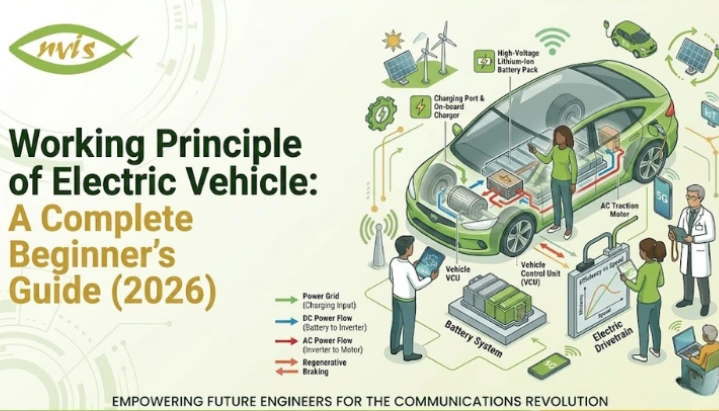
    Working Principle of Electric Vehicle: A Complete Beginner’s Guide 2026

    TL;DR
    This guide explains the working principle of electric vehicles in simple terms from how the battery stores energy to how the motor converts it into motion. Whether you are a student, fresher, or tech enthusiast, this blog breaks down every key concept step by step, without assuming prior knowledge.

    5 Key Points

    • This blog is for university students, freshers, and first-time learners exploring electric vehicle technology. This guide simplifies EV concepts without sacrificing technical accuracy.
    • The electric vehicle working principle is built on one core idea: converting stored electrical energy into mechanical motion using a motor, controller, and battery.
    • Unlike petrol engines with thousands of moving parts, EVs have around 20 moving components making them simpler, cleaner, and cheaper to maintain over time.
    • Regenerative braking is one of the most innovative features of EVs; it recaptures energy during deceleration and sends it back to the battery, extending driving range.
    • Understanding the working principle of EV technology today opens doors to careers in automotive engineering, clean energy, embedded systems, and sustainable mobility.

    India sold more than 2.3 million EVs in 2025, representing around 8% of the nation’s new vehicle registrations. This figure continues to rise in 2026

    The parking lots are being filled with Tata Nexon EVs as well as Mahindra’s new electric SUVs. Ola and Ather’s e-2Ws can be seen on the streets every day. Delhi, Mumbai and Nagpur have public bus services operating electric buses. In 2025 alone, the number of EVs sold globally reached 20 million, accounting for 25% of all new vehicles sold globally.

    However, here’s an interesting question: Do you know the workings of an electric vehicle?

    Most people believe that it operates on a battery and a motor and that is correct, but it still doesn’t tell the entire story. EV technology is the culmination of an accurate and intricate system that operates seamlessly, from accelerating to braking.

    It is clearly explained in this guide, progressively and without jargon. For those considering EV for the first time, you’ve come to the right place.

    What Is an Electric Vehicle?

    An electric vehicle uses electricity as its primary source of power instead of fossil fuels such as petrol or diesel.

    A conventional internal combustion engine (ICE) vehicle uses petrol or diesel as fuel to generate heat which is then transformed into mechanical energy through a multitude of mechanical events including the movement of pistons, crankshafts, camshafts and exhaust systems. It’s always a lossy process: part of the energy that is released when you burn something is not used to make things move.

    An EV doesn’t involve combustion at all. Instead, three fundamental systems perform propulsion: a battery pack containing electrical energy, an electric motor that translates the electrical energy into rotary power, and a controller that controls the entire propulsion system. A petrol car is equipped with around 2,000 moving mechanical parts, whereas a Battery Electric Vehicle (BEV) typically has only around 20 moving parts in its drivetrain

    A basic working principle of electric vehicle technology is the direct conversion of electrical energy into mechanical energy, which is cleaner and also much more energy-efficient than combustion.

    Core Components of an Electric Vehicle and Their Functions

    In order to grasp the working principle of an EV, it’s essential to comprehend each of its key components and their functions. Consider these to be organs of a car, each with a specific function, and the system fails when the organ malfunctions.

    1. Battery Pack: Fuel Tank of an EV

    The energy journey starts in any electric vehicle with a battery pack.

    Modern EVs use a much larger and more advanced version of the lithium-ion batteries found in smartphones. These packs are made up of thousands of individual battery cells assembled in modules, then into a battery pack under the vehicle chassis.

    The battery stores energy in chemical form and is charged using Direct Current (DC). During charging, electrical energy is converted into chemical energy inside the battery cells whether it is at home or at a public charging station.

    capacity of the battery is measured in kilowatt-hours (kWh). The higher the kWh rating, the more energy stored, which is the more range available when driving. For instance, the battery in Tata Nexon EV Max is 40.5 kWh, offering a range of around 437 km on a full charge, based on standard test conditions. The Mahindra BE 6e, features a 79 kWh battery pack with a claimed range of around 680 km under test condition.

    2. Battery Management System (BMS): Brain Behind Battery

    It’s not good enough to have just a battery pack. There is also a need for a monitoring and protection system to be maintained at all times.

    BMS monitors the voltage, temperature and charge of each battery cell. It prevents over charging or over discharging of any cell which can cause battery damage or safety hazards.

    BMS also calculates two important metrics:

    • State of Charge (SoC): How much energy is currently stored essentially the battery percentage shown on your dashboard.
    • State of Health (SoH): overall condition of battery relative to its original capacity, which degrades slightly over time.

    If anything goes wrong a cell overheating, voltage spiking beyond limits BMS triggers a fault alert and can shut down the affected section to protect the system.

    3. Inverter: Language Translator of EV

    This is a technical hint which most novices are unaware of.

    battery stores and delivers DC (Direct Current) electricity. However, most electric motors employed in vehicles, including AC induction and Permanent Magnet Synchronous Motors (PMSM) operate at AC (Alternating Current).

    This is what the inverter does.

    The inverter takes the Direct Current from the battery and changes it to Alternating Current which powers the motor. It does so by a technique known as Pulse Width Modulation (PWM) where the current is switched on and off very frequently to simulate an alternating wave. The inverter also regulates speed and torque of the motor in real time by varying the frequency and amplitude of this wave.

    An inverter can be considered as a translator between two languages of electricity. If not, the battery and motor would not be able to communicate to each other.

    4. Electric Motor: Where Electricity Becomes Motion

    The electric motor is the heart of EV working principle. It’s the one thing that actually propels a car.

    The motor is based on the principles of electromagnetism. Alternating current passing through the coils produces a rotating magnetic field. This field will interact with a magnet or induced current in the rotor of the motor, making it spin. The drivetrain delivers that rotary force known as torque to wheels.

    There are several types of motors used in EVs:

    • Brushless DC (BLDC) Motors: High efficiency, compact, and low maintenance. Commonly used in electric scooters and bikes.
    • Permanent Magnet Synchronous Motors (PMSM): Deliver high torque density and fast responsiveness. Found in premium EVs like Tesla Model 3.
    • AC Induction Motors: Durable and cost-effective. Often used in commercial vehicles and buses.

    There is one key benefit to electric vehicle motors; they provide 100% of its torque from a complete stop whereas petrol engines have to fire up to achieve full torque. That is why EVs feel so quick and responsive during acceleration.

    5. Power Control Unit (PCU) / Controller: Decision-Maker

    The entire system is held together with a controller.

    Pressing the Accelerator Pedal does not directly increase the power to the motor. You are telling the controller how much electric energy to extract from the battery, you are telling the inverter what to do and you are telling the motor how fast to spin.

    controller adjusts power delivery using current feedback from your pedal position, vehicle velocity, battery state-of-charge and other sensor data. It’s a layer that makes decisions and decides what exact electrical instructions to give.

    Controllers are sophisticated microprocessor-based systems that frequently include safety features, energy optimisation algorithms, diagnostics and more.

    EV Working Principle: Step-by-Step Energy Flow

    Now that you understand individual components, let us trace complete energy flow in a moving electric vehicle. This is where the working principle of EV technology becomes genuinely clear.

    Step 1 – Energy Storage: The battery pack stores electrical energy in DC form, charged from an external power source (home socket or charging station).

    Step 2 Signal from Driver: You press accelerator. A sensor detects pedal position and sends a signal to the controller.

    Step 3 Controller Response: controller processes signal and determines how much current to draw from battery.

    Step 4 Inversion: inverter converts DC current from battery into AC current and adjusts its frequency to control motor speed.

    Step 5 Motor Rotation: AC current flows into an electric motor, creating a rotating magnetic field. rotor spins, generating torque.

    Step 6 Power Transfer: torque is transmitted through drivetrain (and a single-speed transmission in most EVs) to wheels, propelling vehicles forward.

    Step 7 Thermal Management: Throughout this process, the thermal management system monitors temperatures across battery, inverter, and motor, using coolant circuits to prevent overheating.

    The entire chain from battery to wheel happens in milliseconds, continuously and seamlessly.

    Regenerative Braking: EV’s Most Clever Feature

    The working principle of an electric vehicle is one of the most innovative, which is called regenerative braking and it needs to be explained in its own right.

    When a vehicle brakes in a conventional car, the kinetic energy of the moving vehicle is lost by friction between the brake pads and discs, which is converted to heat. That heat will be lost.

    EVs do something different.

    An electric motor now becomes a brake when the foot is lifted off the accelerator or pressed on the brake pedal. Rather than consuming electricity to create motion, the motor temporarily acts as a generator during braking. The wheels drive the motor, which then produces electricity and sends it back to the battery. This electricity goes back to the battery and is stored.

    result? You are regaining the energy that is lost.

    In some driving situations, especially in stop-and-go urban driving, regenerative braking can extend an EV’s driving range by up to 20%. It also minimizes brake pad wear and tear, which helps to lower the overall maintenance cost.

    This is one of the main reasons that EVs are particularly well suited to urban driving environments like the Bengaluru, Mumbai, or Delhi cities where frequent braking is not a loss of energy for the vehicle, but an opportunity to recover it.

    How EV Charging Works: From Grid to Battery

    It is not possible to comprehend the working principle of electric vehicles unless one understands what happens when energy is introduced into batteries.

    EVs come equipped with a charging port and an onboard charger. Onboard charger is used when you connect to a power source to transform incoming AC power from the grid to your battery’s DC power. Unlike AC chargers, DC fast chargers (Level 3) bypass the onboard charger and supply DC power directly to the battery at much higher speeds.

    EV charging is broadly categorised into three levels:

    Level 1 Charging: In countries like the US, it uses a standard 120-volt household socket. In India, slow charging is usually done through a standard 230-volt domestic outlet. Adds roughly 8-15 km of range per hour. Suitable for overnight charging.

    Level 2 AC Fast Charging: Uses a dedicated 240-volt charging unit (home wall box or public AC charger). Adds approximately 40-80 km of range per hour. most common charging method for daily use.

    Level 3 DC Fast Charging: Delivers DC power directly to battery at high wattage (50 kW to 350 kW). Can charge a battery to 80% in 20-45 minutes depending on vehicle and charger rating. Available at highway charging stations and commercial hubs.

    An interesting aspect is that while fast charging, the BMS learns and regulates charging speed when approaching the 80-100% charge rate to protect battery health and reduce thermal stress. That is why the remaining 20% of the charge time is always longer than the initial 80%.

    Types of Electric Vehicles: Not All EVs Are Same

    Many people don’t know that the term “electric vehicle” is used to describe a wider variety of vehicles than most. Recognizing differences is a vital aspect of comprehending comprehensive EV working principle panorama.

    Battery Electric Vehicle (BEV)

    This is the most basic EV! BEVs are powered by 100% electricity that is stored in a battery pack. No fuel tank, no internal combustion engine and no tailpipe emissions. They include Tata Nexon EV, Hyundai Ioniq 5 and the Tesla Model 3. The range of BEVs is usually 200-500 km, depending on battery size.

    Hybrid Electric Vehicle (HEV)

    HEVs are hybrid vehicles that have a petrol and electric motor, as well as a small battery. The battery is charged using regenerative braking and there is no plug-in charging for the engine. The electric motor helps the engine when accelerating to help conserve fuel. The Toyota Camry Hybrid is a popular model to be sure.HEVs usually provide limited pure-electric driving capability, but they do generate considerable fuel savings.

    Plug-in Hybrid Electric Vehicle (PHEV)

    PHEVs are considered an intermediate step toward full electrification. They’re also larger than HEVs, and can be charged with a plug-in to a socket. At present, the PHEVs are capable of operating in pure electric mode for a maximum of 30 to 80 km and then switching to petrol engine. This makes them more convenient for Indian consumers with range anxiety and low access to public charging stations.

    Fuel Cell Electric Vehicle (FCEV)

    FCEVs are fuelled by hydrogen. The onboard fuel cell uses hydrogen and oxygen to produce electricity to operate an electric motor. There is only water vapour emitted. The FCEVs are in their infancy in India, but the path is one to watch in the mass transport sector like trucks and buses.

    Why EV Working Principle Matters for Students and Freshers

    Knowing EV working principles is not only useful as general knowledge but also as a skill that could be useful in your future career, especially for engineering/technology students, but even for students in business.

    India’s EV industry is becoming one of the country’s fastest-growing sources of new jobs. Companies such as Tata Motors, Ola Electric, Ather Energy, Mahindra Electric, and newer entrants like BYD India, are actively hiring in the mechanical engineering, embedded systems, battery technology, power electronics, software and supply chain management domains as of 2026. In 2025, electric four-wheelers sales jumped 76.9% YoY and the trend is catching momentum to hire significantly.

    Charging infrastructure development, grid management, battery recycling, and electric vehicle data analytics are also key areas seeing growth as a result of the transition to electric mobility.

    Academically speaking, EV technology is in an environment that is multi-disciplinary (electrical, mechanical, computer, and materials). The interactions between these systems provide you with a solid conceptual background to further your studies in specialised courses, research projects or internships in this field.

    The concept of EV systems has become mainstream now. It is the basis of a growing industry that will shape transportation over the next few decades.

    Conclusion

    The working of electric vehicles is based on a single consistent process: electrical energy stored in a battery pack is fed through an inverter, transformed to the correct shape, and then sent to an electric motor that generates mechanical power required to move wheels. A controller is responsible for controlling all the stages of this flow in real-time and BMS will make sure that the battery continues to operate safely during the process. Regenerative braking completes the energy loop by capturing energy as the vehicle slows down, and then storing it.

    This is a system that is precision and efficient, not combustion and heat. It’s more than just an alternative to petrol cars, it’s a total engineering revolution in transportation that will soon become mainstream on the planet and in India.

    This is an opportunity for students to develop this understanding if they are starting to delve into this field. This will be expanded into career-relevant skills through a deeper study of battery chemistry, power electronics, and motor control systems.

    FAQs

    The key in the working principle of an electric vehicle is to convert the stored electrical energy in the battery to mechanical energy through the use of an electric motor. A controller will control the flow of electricity with driver input and an inverter will convert DC power to AC power for the operation of the motor. The outcome is smooth and efficient propulsion, and no direct emissions.

    A petrol vehicle The heat being generated in an I.C.E. burning fuel and converting the heat to mechanical work is an inefficient process. The working principle of the EV is completely different from combustion, as it directly converts electrical energy into mechanical energy with a great efficiency. The EV also has much fewer moving parts and therefore requires much less maintenance.

    Regenerative braking is a braking technology that allows the electric motor to work in reverse as it slows the vehicle down and acts as a generator. It is able to transform the vehicle’s kinetic energy into electrical energy and store it in a battery. This process can increase the driving range of an EV by as much as 20% in city driving conditions, and will also help to decrease physical brake component wear.

    Most modern electric vehicles have lithium-ion battery packs, which are of a similar but much larger size than those found in smartphones. These packs are made up of thousands of individual cells that are packaged into modules. Lithium Iron Phosphate (LFP) batteries are also being adopted by some newer EVs, whose increased thermal stability and longer cycle life make them better.

    There are four primary types of BEVs: fully electric, Hybrid Electric Vehicles (HEVs), which have a petrol engine and a self-charging electric motor; Plug-in Hybrid Electric Vehicles (PHEVs), which have both plug-in electric range and petrol back-up; and Fuel Cell Electric Vehicles (FCEVs), which use hydrogen to generate electricity onboard.

    Absolutely. As of 2026, India’s electric vehicle sector is one of the fastest-growing industries in the country. EV sales crossed 2.3 million units in 2025 and continue rising. Understanding the working principle of EV technology creates career opportunities across automotive engineering, power electronics, battery technology, software, and infrastructure development. It is a foundational skill set for decades of sustainable mobility already underway.

    Tags: Working Principle of Electric Vehicles

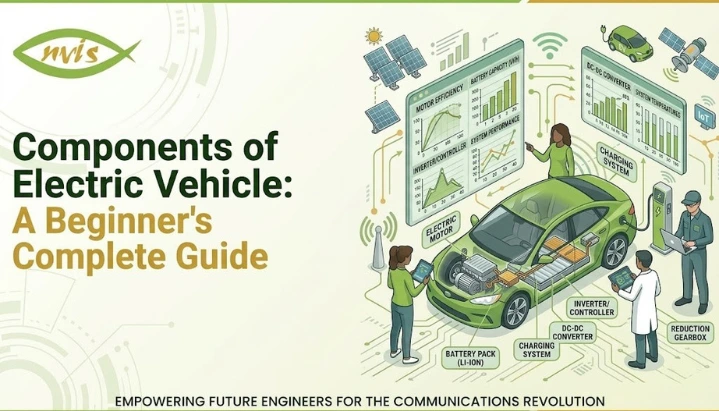
    Components of Electric Vehicle: A Beginner’s Complete Guide

    TL;DR

    • This blog is for university students, freshers, and technology learners. This guide explains what are the main components of electric vehicle systems without assuming any prior engineering knowledge.
    • Electric vehicles replace traditional combustion engines with a battery-powered electric motor system, a fundamental shift that changes almost every part of how a vehicle works.
    • The core components of an electric vehicle include the traction battery pack, electric motor, inverter, onboard charger, and controller, each playing a distinct and critical role. 
    • Understanding how EV components interact from energy storage to motion to normal regulation helps you grasp why EVs are more efficient, lower in maintenance, and better for the environment.
    • The EV industry is one of fastest-growing technology sectors globally, and knowing these components gives you a solid foundation for careers in automotive engineering, energy, or sustainable technology.

    The switch to EVs is one of the biggest engineering transformations in modern transport. Conventional ICE (internal combustion engine) vehicles rely on burning fossil fuels to generate mechanical power, while EVs use a completely different energy chain that is all based around the storage, conversion and management of electrical energy.

    This shift is not simply about replacing one energy source with another. This shift requires a completely new set of components designed to operate together within an integrated electrical system. The knowledge of the components of EV architecture is not just about being technically interested, but is essential for any aspiring engineer in the automotive industry, sustainable energy, power electronics, or EV policy.

    The EV market is growing rapidly around the world, as battery prices drop, emission mandates from governments increase and charging station investments are pouring in. With EVs gaining traction, engineers, students, and consumers alike would benefit from understanding the primary elements of an EV system as well as how they work together.

    This guide provides fundamental information on the key sections of an electric vehicle system in a non-technical and easy-to-understand manner. This article explains the role and purpose of each component, whether you are a student, a curious learner or a potential EV tech enthusiast.

    What Makes an Electric Vehicle Different

    It is important to understand the bigger picture before jumping into components.

    A standard car uses an internal combustion engine (ICE) to power the vehicle. It produces mechanical energy and helps in the movement of vehicles by burning petrol or diesel. It involves hundreds of moving parts such as pistons, crankshafts, gearboxes, and exhaust systems, while also producing carbon emissions as a byproduct.

    An electric vehicle gets rid of all that. Rather than use fuel to spin a motor, it uses electricity from a battery pack to spin an electric motor. The wheels are powered by the motor. It’s the basic concept.

    This creates a simpler energy chain with fewer parts, less friction, lower maintenance, and no direct emissions. Creating a car based on electric power, however, comes with its own set of engineering difficulties and hence the components of EV design become especially interesting.

    Major Components of Electric Vehicle Systems

    Let us now go through each of the main components of electric vehicle architecture, one by one.

    1. Traction Battery Pack

    The traction battery pack is the most important component of an electric vehicle. It stores the electrical energy required to power the motor and operate the vehicle 

    It’s like a fuel tank in a normal car but it stores a charge of electricity. A battery pack is made up of hundreds or thousands of individual lithium-ion cells grouped into modules, which are assembled into a full pack.

    Batteries are rated by their energy capacity, in kilowatt-hours (kWh). The higher the kWh rating the longer the driving range. For instance, a 75 kWh battery will enable a vehicle to cover more distance in one charge, than a 40 kWh battery.

    The battery pack also supplies direct current (DC) power to other vehicle components. Its biggest advantage is the ability to store energy produced during the process of regenerative braking, which we’ll discuss later in this guide.

    2. Electric Motor (Traction Motor)

    The electric motor is the muscle of the electric vehicle.

    An electric motor converts electrical energy into mechanical rotational force that turns the wheels. This is the component that propels the car forward and backward.

    This is a function of the combustion engine on a traditional car. However, an electric motor is much more efficient to do this. In a combustion engine, only 20 to 40 per cent of fuel energy is converted into useful motion. In contrast, electric motors can convert more than 90 per cent of electrical energy into mechanical movement. 

    There are two common types of electric motors used in EVs:

    • AC (Alternating Current) motors are widely used because they are efficient, reliable, and require less maintenance. Tesla Model 3, for instance, uses an AC induction motor.
    • DC (Direct Current) motors Less common in modern EVs but still used in some applications.

    Many high-end EVs use two or more electric motors, one for the front axle and one for the rear axle which gives the vehicle all-wheel drive and much better performance.

    3. Power Inverter

    This is where it gets a little technical, but don’t worry, it’s not too bad.

    A traction battery stores energy in the form of DC electricity. However, most high power electric motors used in EVs operate on alternating current (AC) electricity. How then does a car do this? The power inverter will do that.

    The inverter is a power module that converts the direct current from the battery, into alternating current for the motor. It also works during regenerative braking, where the motor acts as a generator and the inverter helps transfer recovered electrical energy back to the battery.

    The inverter is not only a type-switching device. It also regulates the frequency and voltage of electricity sent to the motor, resulting in a varying speed and torque of the motor. This means that the inverter is involved in the acceleration of the vehicle and its running efficiency.

    4. Onboard Charger (OBC)

    Electricity from the grid (when plugged into the wall socket or public charging station) is alternating current or AC. However, the battery keeps the DC. In order to charge the battery, it must be converted from AC to DC power. That is the role of the onboard charger.

    This conversion is performed by an onboard charger that is located inside the vehicle and is used during Level 1 and Level 2 charging. It controls charging speed, keeps track of battery health, and ensures the electric current the battery receives is of proper voltage and current.

    It should be noted that DC fast chargers (such as those at highway charging stations) don’t use the onboard chargers at all. Fast charging times are much faster, because you are providing high power DC electricity directly to the battery.

    5. Charge Port

    EV connects to an outside power source via a charge port. It’s kind of like a fuel cap on a regular car, but with a cable.

    Each manufacturer has a different location of the charge port. On some EVs, it is located at the front, while on others it may be placed at the rear or on the side. Charge ports need to be compatible with the charging standards used in your region. For instance, Type 2 connectors are widely used in Europe, and CCS (Combined Charging System) connectors enable both AC and fast DC charging.

    Wireless charging is another feature that is still new on most consumer EVs, but is supported by some.

    6. DC-DC Converter

    This is a component that many people new to EV technology may overlook , but it is very practical.

    A traction battery is a high voltage battery, typically 200 to 800 volts depending on the vehicle. However, the low voltage inside of the car lights, dashboard screens, the power window, the audio system and the horn are all powered by a 12 volt battery.

    The DC-DC converter reduces high-voltage DC from the traction battery to 12-volt DC for low-voltage accessories. It also charges the auxiliary battery.

    If not for a DC-DC converter, you’d have to have a separate power source for the car’s electronics, something that would be unnecessarily bulky and complicated.

    7. Auxiliary Battery

    Each EV is equipped with a secondary battery as well as the primary battery for propulsion. This type of battery is known as an auxiliary battery and usually consists of a standard 12-volt battery that would be found in a standard car.

    The auxiliary battery powers essential low-voltage systems before the main traction battery becomes active. This covers such items as onboard computers, door locks, lights and low voltage components that must function whether or not the vehicle is moving.

    The auxiliary battery is kept charged by a DC-DC converter during normal operation. It can be thought of as a backup power system for the vehicle’s electronics.

    8. Controller (Electronic Control Unit / VCU)

    The controller is the brain, while the battery is the heart and the motor is the muscle.

    The Vehicle Control Unit (VCU), also called the Electronic Control Unit (ECU), acts as the central decision-making system of an EV. It continuously monitors driver inputs such as accelerator position, brake pressure, battery condition, motor speed, and many other variables to make real-time decisions about power distribution throughout the vehicle. 

    When you press the accelerator pedal, the controller tells the battery to send power through the inverter to the motor, resulting in vehicle movement. When you ease off, it controls the regenerative braking process. It also enforces safety limits to prevent overcharging, overheating, and over-discharging of the battery.

    In addition to VCU, modern EVs will also employ a dedicated Battery Management System (BMS), which is there to specifically manage all of the traction battery cells. It will ensure that the cells have even charging and discharging, keeping the battery healthy and increasing its life.

    9. Thermal Management System 

    Don’t subject batteries or electronics to extreme temperature variations. Overheating can create hazardous conditions, and excessively high temperatures can significantly reduce performance. In extremely cold conditions, the battery becomes less efficient and delivers reduced driving range.

    A thermal management system maintains the temperature of all components within an optimal range. It consists of liquid cooling circuits, heat exchangers, radiators and in some cases heating elements, that help regulate temperatures in battery packs, motors, inverters, and power electronics.

    The system also manages the heat generated during regenerative braking and other high-power operations. It is essential that the right temperature is achieved during this process to ensure efficiency and safety.

    Some high-tech EVs also feature heat pumps, which are systems used in home heating that can efficiently warm the cabin even in cold weather conditions without spending too much battery.

    10. Regenerative Braking System

    It is one of the most ingenious aspects of today’s electric cars, and when you grasp how it works, you’ll be amazed at the efficiency that’s built into these cars.

    A conventional car converts the kinetic energy of a moving vehicle into heat when the brakes are applied, due to friction between the brake pads. This heat is lost energy.

    Regenerative braking harnesses energy that would otherwise be lost in an EV. When the driver lifts off the accelerator or applies the brakes, the electric motor temporarily acts as a generator. It takes the vehicle’s kinetic energy and changes it back to electrical energy, which passes through the inverter and is stored in the vehicle’s battery pack.

    This is done simultaneously: it slows down the vehicle (as normal braking does), and it partially charges the battery. Regenerative braking can make a significant improvement to the driving range of an EV on city roads where frequent stops are common.

    11. Transmission

    Older vehicles rely on a multi-speed automatic transmission to maintain the optimum power range of the engine at various speeds. Electric motors don’t require this since they provide a steady torque over a broad range of speeds. That is why most EVs utilize a solitary speed transmission, a far simpler setup.

    A single-speed transmission transfers power from the motor to the wheels using a fixed gear ratio. This reduces the need for complex gears and clutch systems 

    It is this simplicity that helps EVs to be so smooth and responsive to drive. No power loss due to gear changes.

    How All Components of Electric Vehicle Work Together

    Now that you know each component individually, it helps to understand complete energy flow.

    Here is a simplified version of what happens when you drive an EV:

    1. The charge port and onboard charger bring electricity in from the grid and store it in a traction battery pack.
    2. When you press the accelerator, the controller signals the battery to release energy.
    3. Electricity flows from battery to inverter, which converts DC to AC.
    4. An electric motor receives AC electricity and converts it into mechanical energy.
    5. The transmission delivers mechanical energy to the wheels, causing the vehicle to move. 
    6. DC-DC converter continuously powers accessories and keeps the auxiliary battery charged.
    7. A thermal management system monitors temperatures  and keeps everything within safe limits.
    8. When you slow down, the regenerative braking system recovers kinetic energy and sends it back to the battery.
    9. The Battery Management System watches over every cell to ensure health and safety at all times.

    Every one of the components of electric vehicle systems plays a role in that chain. Remove any one of them, and the vehicle cannot function safely or efficiently.

    Why Understanding Electric Vehicle Components Matters?

    EVs are more than just a trend , they represent a paradigm shift in how we power our transportation, and the trend is accelerating.

    The International Energy Agency (IEA) Global EV Outlook report indicates that the EV market will see significant growth year on year, as battery costs continue to drop and governments push for cleaner transportation. India is investing heavily in EV infrastructure and promoting EV adoption through the Faster Adoption and Manufacturing of Electric Vehicles (FAME) scheme 

    This is an actual opportunity for students and young professionals. Knowing the major parts of EV systems is essential for the automotive industry, battery engineering, power electronics, embedded electronics, and sustainable energy professions.

    As a consumer, this information can be helpful when you’re weighing the range of an EV, the charging options, or which EV is the right one for you.

    Conclusion

    Electric vehicles are sophisticated systems that combine electrical, mechanical, and thermal engineering. Every component, from the traction battery pack that stores energy to the inverter that converts it and the Battery Management System that protects it, serves a specific purpose in the EV energy chain. All of these components are interconnected, and their effectiveness depends on how efficiently they work together.

     This change from combustion to electric propulsion is not merely an engineering replacement. It represents a paradigm shift in energy storage, propulsion, cooling, and regenerative systems within vehicle operation. This knowledge of key elements of electric vehicle systems offers a conceptual base for fruitful discussion of this technology in an academic, professional or practical setting.

    Understanding these basic components is becoming increasingly important, especially for engineers, but also for anyone wishing to understand the technology that defines the future of transportation, as the use of electric vehicles is growing rapidly everywhere and an EV sector is building up in India.

    Frequently Asked Questions

    The key components of an EV system are the traction battery pack, electric motor, power inverter, onboard charger, charge port, DC-DC converter, auxiliary battery, controller, Battery Management System, thermal management system , and single-speed transmission. Each component serves a particular function for energy storage, conversion or management.

    The traction battery pack is typically the most important element in an EV design. It carries all the energy required to propel a vehicle, and directly affects vehicle range, vehicle performance and the total cost of ownership. The EV industry is moving forward largely due to battery technology.

    The electric motor converts to a generator when the driver slows down or applies the brakes. The motor uses kinetic energy to provide electrical energy, which is not wasted as heat (as happens with friction brakes). This electricity is then fed back through the inverter to the traction battery for later use. Regenerative braking allows for longer driving range – especially in urban environments.

    Electric motors can provide continuous torque at all speeds and unlike combustion motors are required to run in a limited range of RPMs. This eliminates the need for EVs to have a multi-speed gearbox to ensure that the motor operates within its optimal range. There is no need for a complex multi-speed gearbox because a single-speed transmission is sufficient for most EVs, and there’s a reduction in mechanical complexity and maintenance.

    BMS is an electronic control system, which controls and manages each individual cell in a traction battery pack. It also ensures even charging and discharging of the cells, avoids over charging and over-discharging, keeps track of temperature, and reports battery health information to the vehicle’s primary controller. A properly designed BMS will be crucial for battery life and vehicle safety.

    Most modern EV traction batteries are designed to last around 8–15 years or approximately 200,000 miles under normal usage conditions.  Battery performance gradually degrades over time rather than failing suddenly,  but it will deteriorate over time. Warranties on EV battery packs are available  and are offered by many manufacturers for 8 years or 100,000 miles, whichever is reached first.

    Tags: Components of Electric Vehicl

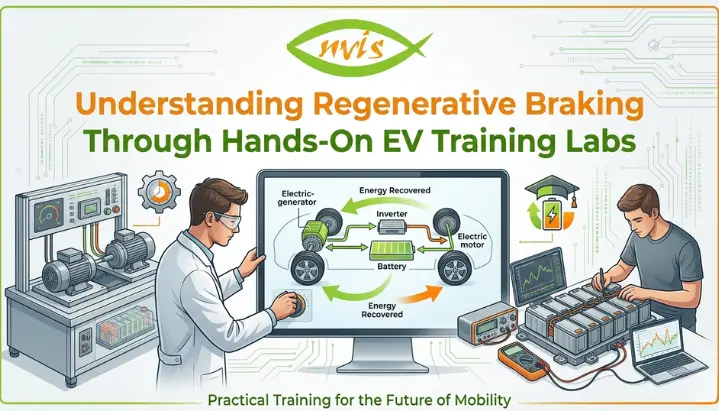
    Understanding Regenerative Braking Through Hands-on EV Training Labs

    TL; DR

    • This blog is ideal for engineering students, diploma learners, and aspiring EV professionals who want to understand regenerative brakingthrough practical learning.
    • Regenerative brakingimproves EV efficiency by converting kinetic energy into electrical energy and storing it via regenerative charging.
    • A regenerative braking systemenhances driving range, reduces energy loss, and minimizes wear on traditional braking components.
    • Factors like tyre quality, rolling resistance, and pressure directly impact effectiveness of regenerative braking.
    • Hands on EV training labs help students gain real world experience, understand system integration, and build industry ready technical skills.

    The future of transportation is changing with rapid development of electric vehicles in India and other parts of the world. Increase in fuel prices, environmental issues, and the need to achieve sustainable mobility has increased the pace of EV adoption, which has resulted in a high demand for professionals in this field. Efficiency is a key factor in EV performance and driving range, as these vehicles rely entirely on electricity. This is where regenerative braking comes in as one of innovations, which assists vehicles to recover energy that would have been wasted.

    The regenerative braking system transforms kinetic energy into electrical energy during deceleration and recharges it into battery via regenerative charging. This process not only enhances energy efficiency but also increases vehicle range and reduces wear on conventional braking components. These concepts are best understood through practical experience. EV training laboratories allow students to view and study regenerative braking in real time, closing the gap between theory and practice and preparing them for the dynamic electric mobility industry.

    Related Blogs:

    Hydrogen Education Labs: Preparing  Next Generation of Clean Energy Engineers

    What is Regenerative Braking?

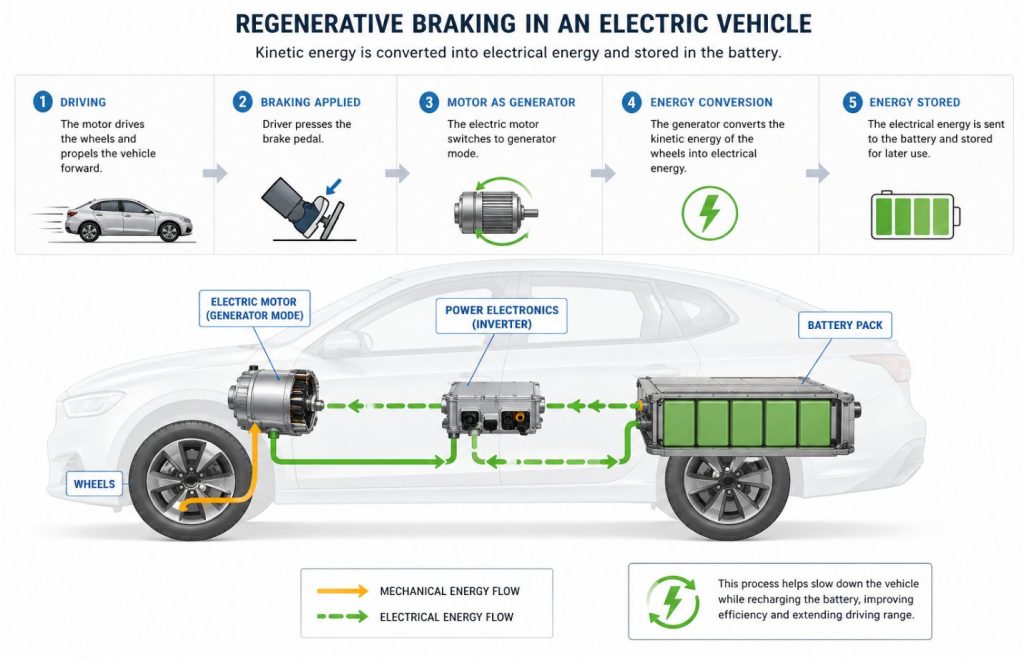
    Regenerative braking is an established technology that is applied in electric cars where energy produced during braking is not wasted but is converted into useful electrical energy. A regenerative braking system, unlike traditional braking systems, does not dissipate energy as heat, but instead, it recaptures energy and feeds it back to battery via regenerative charging, enhancing overall efficiency of the vehicle. In a traditional braking system, the vehicle is slowed down by friction between brake pads and wheels, which results in loss of energy. In regenerative braking, however, the electric motor is an important component, as it reverses its role. It does not use energy but instead, it is a generator during deceleration, transforming the kinetic energy of a vehicle into electrical energy.  Energy thus recovered is stored in the battery and hence the process is efficient and sustainable.

    How a Regenerative Braking System Works?

    A regenerative braking system is developed to not only decelerate vehicles but also to recover energy in process.  The system uses regenerative braking to transform wasted kinetic energy into useful electrical energy and recharges the battery through regenerative charging, which makes EVs more efficient and sustainable.

    1. Brake Input or Accelerator Release

    Regenerative braking starts when the driver presses the brake pedal or releases the accelerator.  system does not rely solely on friction brakes, but it switches to energy recovery mode.

    2. Motor Acts as a Generator 

    In a regenerative braking system, an electric motor reverses its function during deceleration. It begins to operate as a generator, which is necessary to transform motion into useful energy.

    3. Energy Conversion Process

    The kinetic energy of a vehicle is transformed into electrical energy as the vehicle decelerates. This is the main concept of regenerative braking, and the system is more efficient than traditional braking.

    4. Regenerative Charging of Battery

    Generated electricity is sent back to the battery through regenerative charging. This helps in recovering energy and extending the overall driving range of vehicles.

    5. Role of Battery Management System (BMS)

    Battery Management System oversees the whole process, which is safe charging, regulating voltage levels, and optimizing performance of regenerative braking systems in repeated braking cycles.

    Why Regenerative Braking Matters in EVs

    Electric vehicles would not be as efficient as they are today without regenerative braking. The regenerative braking system assists in reclaiming energy when decelerating, enhancing overall efficiency and increasing driving range. It also minimizes waste of energy, which enables vehicles to control power better. This is particularly helpful when driving in a city where there is a lot of stopping and starting. Rather than wasting energy, EVs employ regenerative charging to feed energy back to the battery each time it slows down. Meanwhile, decreased use of traditional brakes results in fewer wear and tears, decreased maintenance requirements, and a more affordable and sustainable driving experience.

    Benefits of Regenerative Braking

    • Regenerative braking significantly improves energy efficiency by capturing energy that would otherwise be lost as heat and converting it into usable electrical energy through regenerative charging.
    • A regenerative braking system helps extend driving range of electric vehicles by continuously recovering and reusing energy during deceleration.
    • It reduces dependence on traditional friction brakes, leading to less wear and tear, lower maintenance costs, and improved durability of braking components.
    • By optimizing energy usage and reducing wastage, regenerative braking contributes to sustainable transportation and supports shift toward cleaner mobility solutions.

    Importance of Tyre Quality in Regenerative Braking

    Although regenerative braking is very efficient, its operation is greatly affected by the quality of tires and contact with the road. Depending on following factors, effectiveness of a regenerative braking system and regenerative charging may differ:

    · Tyre Tread and Grip 

     tread pattern and quality of rubber used determine grip of tyre on road. A good grip can support more stable and efficient energy recovery, whereas old or poor-quality tyre will decrease efficiency of regenerative braking.

    · Rolling Resistance

    High rolling resistance tyre consumes more energy to move and this limits efficiency of the system. Tyer with low rolling resistance improves overall efficiency and supports better energy recovery during regenerative braking.

    · Tyre Pressure

    Proper tyre pressure will provide maximum contact with the road. Under inflated tyre reduce grip and have an adverse impact on regenerative braking systems.

    · Tyre Type

    Various types of tyre, including summer, winter, or all season, have different degrees of grip and resistance, efficiency of regenerative braking can be maximized by selecting appropriate tyre to suit driving conditions.

    · Overall Impact

    Simply put, the state and quality of tyre directly affect the effectiveness of a regenerative braking system to recover energy. Good quality tyre enhances efficiency and energy recovery, leading to improved EV performance and range.

    Role of EV Training Labs in Understanding Regenerative Braking

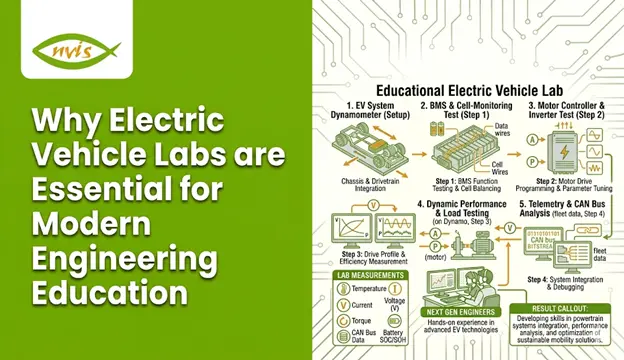
    EV training laboratories are crucial in enabling engineering students to learn about regenerative braking beyond theoretical knowledge. Practical learning provides students with practical experience with real EV systems, such as motors, controllers, and batteries, which makes them have a clear understanding of how a regenerative braking system works in the real world. This practical method not only enhances technical knowledge but also prepares students for industry demands. Moreover, these laboratories enable students to conduct simulations and experiments to test regenerative braking in various conditions. Students will be able to see regenerative charging in real time, study flow of energy back to battery, and learn how systems such as BMS control and optimize performance. This is a practical understanding that is necessary in establishing a solid base in electric vehicle technology.

    Practical Experiments in EV Labs 

    EV training laboratories give students a chance to conduct practical experiments that make concepts such as regenerative braking come to life. Among the most important experiments is one that shows energy recovery during braking where students can easily see how a regenerative braking system can capture kinetic energy and transform it into electrical energy rather than dissipate it as heat. Other parameters that students measure include voltage and current produced during regenerative braking, which assists them to comprehend real time system performance. They can understand system behavior better by examining efficiency at various speeds and load conditions. Moreover, work with controllers and BMS integration will enable learners to learn about management control, and optimization of regenerative charging in an EV system.

    Students Gain Through Hands on Training 

    Practical EV training laboratories enable students to acquire practical skills that are not limited to theoretical knowledge. Through direct interaction with systems such as regenerative braking and knowledge of how a regenerative braking system interacts with other EV systems, learners can have a holistic perspective of electric vehicle technology and its practical use.

    • Students develop a system level understanding of EV powertrain, including how regenerative braking interacts with motors, batteries, and controllers.
    • They learn diagnostics and troubleshooting techniques, enabling them to identify faults and optimize performance of systems like regenerative charging and battery management.
    • Practical experiments enhance their ability to collect, analyze, and interpret data, especially related to voltage, current, and energy flow during regenerative braking.
    • Training also equips students with industry relevant technical skills, preparing them for careers in EV design, testing, maintenance, and advanced mobility solutions.

    Conclusion

    Regenerative braking is crucial to enhance efficiency of EVs, increase their range, and promote sustainable mobility by means of efficient regenerative charging. A regenerative braking system is not only integrated to enhance performance but also reduces maintenance needs. This knowledge is further supported by EV training labs that give students real world exposure to systems. This helps them build industry-relevant skills and prepares them to contribute to the growing electric mobility industry.

    FAQS

    Regenerative braking is a mechanism that transforms kinetic energy during braking into electrical energy and charges the battery by regenerative charging.

    A regenerative braking system minimizes loss of energy by reclaiming energy during deceleration, which contributes to increasing driving range and overall efficiency.

    Regenerative charging is the process of sending recovered energy back to the battery when a vehicle slows down or brakes.

    No, regenerative braking cannot completely substitute traditional brakes. It operates in conjunction with them, particularly when braking at low speeds or in case of an emergency.

    Practical training in EV laboratories enables students to see real time regenerative braking and regenerative charging, which will enable them to better understand how the system works and how it can be used in practice.

    Tags: Electrical Vechiel, Regenerative braking

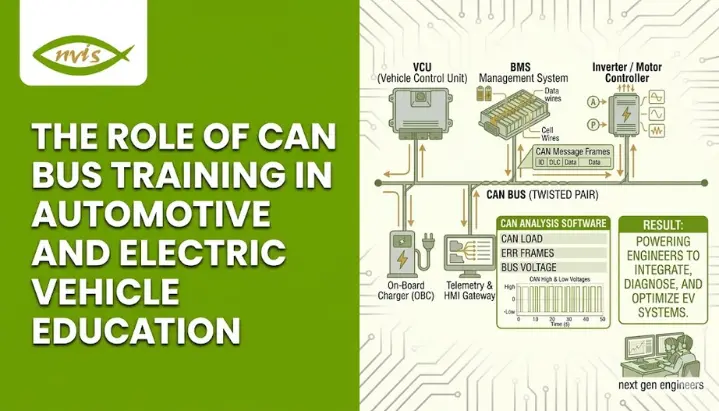
    The Role of CAN Bus Training in Automotive and Electric Vehicle Education

    TL;DR 

    • This blog is primarily for engineering students, automotive technicians, EV researchers, and educators involved in Electric Vehicle Education who want to understand the importance of CAN Bus training in modern vehicle systems.
    • CAN Bus is a critical communication protocol that allows multiple electronic control units (ECUs) in a vehicle to exchange data efficiently, enabling modern vehicles to operate safely and reliably.
    • In EVs, CAN Bus supports essential systems such as battery management, motor control, charging systems, and energy management, making it a fundamental component of Electric Vehicle Education programs.
    • Can bus training helps students and professionals develop practical skills in vehicle electronics, diagnostics, embedded systems, and automotive communication networks.
    • Growth of Online Learning: The availability of can bus training online allows learners to access flexible, cost-effective training programs with simulations and expert guidance, helping them stay competitive in the evolving automotive and EV industries.

    The automobile sector is experiencing one of the greatest technological changes in its history. Modern vehicles are no longer purely mechanical machines powered by engines and basic electronics. Modern vehicles are complex systems that integrate advanced software, sensors, electronic control units (ECUs), communication networks, and intelligent diagnostics. The demand for engineers and technicians with advanced knowledge of electronic and communication systems is increasing rapidly as the electric vehicles (EVs) continue to dominate the global market.

    The Controller Area Network (CAN) Bus is one of the most important technologies that enables communication among various vehicle components. It is a communication protocol which enables various electronic control units of a vehicle to communicate effectively and dependably. CAN Bus technology is at the heart of modern automotive systems, used in engine management systems, braking systems, battery monitoring systems, and motor control.

    Due to its growing significance, CAN Bus training has become a key element of modern automotive training programs. Colleges, high schools, educators, and engineering schools are progressively integrating the concepts of CAN Bus into their syllabus to educate young engineers on the challenges of the future of the automotive and electric mobility sector.

    Meanwhile, the growth of Electric Vehicle Education has further increased the need for CAN Bus knowledge. The automotive industry depends on electronic systems and digital communication networks to control battery operation, motor performance, power distribution, and charging processes in electric vehicles. A lack of proper CAN Bus knowledge makes it difficult for engineers to design, diagnose, and maintain these systems effectively.

    Related Blogs 

    1. How to Use a Programmable DC Power Supply Safely in Student Laboratories
    2. Preparing Future Technicians and Engineers for Smart Energy Management
    3. What Is a Data Acquisition System and How Does It Work?

    Understanding CAN Bus Technology

    However, in discussing the significance of can bus training, it is necessary to know what CAN Bus technology is and how it works in the current cars.

    The Controller Area Network (CAN) Bus is a powerful communication protocol that was initially devised by Bosch in the 1980s to allow microcontrollers and electronic devices in a vehicle to communicate with one another, and not with a central computer. CAN Bus allows multiple devices to communicate over a shared network instead of relying on complex point-to-point wiring.

    In contemporary automobiles, there are dozens of electronic control units that control different functions including engine performance, braking, steering, safety systems, infotainment, climate control, and battery management. These ECUs need to continuously communicate with each other in order to provide efficient and smooth running of the vehicles.

    CAN Bus is a dependable means of conveying such information throughout the car network.

    To illustrate, when a driver presses the brake pedal, a number of systems should react at the same time.The braking system is activated, the stability control system adjusts wheel pressure, and the engine control unit reduces power. All these necessitate quicker communication among various electronic units and this is enabled by CAN Bus networks.

    The key advantages of CAN Bus technology include:

    • Reduced wiring complexity
    • High-speed data communication
    • Reliable and error-resistant messaging
    • Real-time system coordination
    • Scalable integration of multiple electronic devices

    Due to this feature, CAN Bus has emerged as the universal vehicle communication system in the majority of contemporary vehicles.

    With the increasing technology that vehicles have, the engineers and technicians should be aware of the operation of CAN Bus networks.This is where CAN Bus training comes in with immense value to automotive training programs.

    The Importance of CAN Bus in Modern Automotive Systems

    Modern automobiles are highly dependent on electronic systems and digital communication networks. The number of electronic components within vehicles has been growing exponentially over the last 20 years. In present times, an average car can have over 70 electronic control units that interact via networks such as CAN Bus.

    These electronic systems control a wide range of vehicle functions, including:

    • Engine performance and fuel management
    • Anti-lock braking systems (ABS)
    • Electronic stability control
    • Airbag deployment systems
    • Advanced driver assistance systems (ADAS)
    • Infotainment and navigation systems
    • Climate control
    • Transmission management
    • Vehicle diagnostics

    The coordination of these systems would be a very hard task without an efficient communication network.

    CAN Bus also makes sure that every component has the ability to transmit and receive data effectively, and the vehicles can operate effectively and safely. It also enables automotive engineers to make the vehicle architecture simplified and lessen complex wiring harnesses.

    In the case of automotive technicians, the knowledge of the CAN Bus communication is necessary in diagnosing vehicle problems. Most of the contemporary vehicle defects do not have anything to do with mechanical faults but rather issues with the communication between electronic modules.

    The Role of CAN Bus in Electric Vehicles

    Although the CAN Bus technology has extensively been applied in traditional cars, it is more important in electric cars. EVs require the use of digital control systems and advanced electronics in order to regulate the flow of energy, battery safety, and powertrain functioning.

    Electric vehicles have some major systems which use CAN Bus communication and they include:

    • Battery Management Systems (BMS)
    • Motor controllers
    • Charging systems
    • Thermal management systems
    • Inverter systems
    • Power distribution modules

    All these components continuously share data to ensure efficient and safe vehicle operation. As an illustration, the battery management system should continually check the temperature of the battery, its voltage and whether it is charging.This information is communicated to other vehicle systems via CAN Bus.

    Likewise, motor controllers are based on the real-time information provided by other control units and sensors to control power and achieve the best car performance.

    Due to such an interdependent structure, CAN Bus expertise is a requirement when engineers operate in the electric vehicle industry.

    Consequently, CAN Bus training has become a part of the Electric Vehicle Education program.

    Why CAN Bus Training is Essential for Automotive Students

    The automotive industry is becoming increasingly software-driven. Mechanical skills that were being taught traditionally are no longer adequate to modern automotive engineers and technicians.

    Knowledge of vehicle communication networks has emerged as a major requirement to anyone intending to make a career in the field of automotive technology.

    Through structured training programs, students learn how electronic control systems communicate and how engineers design reliable automotive networks.

    Practical Understanding of Vehicle Electronics

    The CAN Bus training assists the students in leaving the theory behind and gaining the insights about the practical aspects of the automobile systems. Studying the communication protocols, students can get a clue of how the modern vehicles work.

    Improved Diagnostic Skills

    Most of the new car problems are associated with electronic failure in communication. Diagnostic tools and network analysis techniques can be used by students trained in CAN Bus technology to diagnose these problems much better.

    Preparation for Industry Requirements

    There are engineers and technicians who are supposed to know vehicle communication networks in automotive companies. CAN Bus knowledge has therefore gained significant importance in the automotive job market.

    Integration with Embedded Systems Learning

    CAN Bus training also supports learning in embedded systems, microcontrollers as well as automotive software development.

    Students who understand communication protocols, can easily design and integrate the electronic systems of vehicles.

    Advantages of CAN Bus Training Online

    The workings of technical education have been revolutionized in recent years through digital learning platforms. Nowadays, students and professionals are able to receive high-quality training programs wherever they are in the world.

    Online training in can bus has facilitated the acquisition of special skills in the automobile communication systems by individuals.

    The main advantages of the online CAN Bus training are:

    Flexible Learning

    The online courses enable students to study at their own speed. This is particularly useful to working professionals who do not want to move out of the job to upgrade their skills.

    Access to Global Expertise

    Training materials are available on online platforms created by industry professionals, engineers of automobiles, and scholars.

    Simulation-Based Learning

    Various training courses on line provide simulation tools that enable the students to practice with virtual CAN Bus networks. These simulations enable the learners to learn about the transmission of a message, the behavior of a network and the diagnostic methodology.

    Cost-Effective Education

    The online training programs can be cheap compared to the traditional classroom training and offer useful technical knowledge.

    Due to these benefits, CAN Bus training online is becoming a popular choice among engineers, technicians, and students around the globe.

    Conclusion

    The automotive field is witnessing a new age that is characterized by electrification, connectivity and smart car systems. In such a fast changing environment, the electronic communication networks are now a fundamental part of modern vehicle design.

    The Controller Area Network (CAN) Bus is one of the most significant communication protocols applied in car systems.

    CAN Bus is used in engine management, braking systems, battery monitoring, and motor control in electric vehicles to provide an efficient way to communicate in-car components.

    Due to its vitality, can bus training has become a necessary component in contemporary automotive training. It equips students and technicians with ideas on how to grasp vehicle electronics, troubleshoot communication problems and develop sophisticated automotive systems.

    Simultaneously, the growth of the Electric Vehicle Education programs has also augmented the need of the CAN Bus expertise. Electric cars are strongly dependent on the digital communication, thus the knowledge of CAN bus is inevitable among the EV engineers.

    FAQs

     CAN Bus ( Controller Area Network) is a communication protocol whereby various electronic control units (ECUs) found in a car can communicate effectively. It also allows systems like braking, engine control, battery control and safety to interact in a seamless way.

    CAN Bus training helps students understand the process of communication between the electronics of the vehicle. This is necessary in the diagnosis of system failures, automotive network design and involvement with state of the art vehicles and electric vehicle systems.

     CAN Bus is applied in the Electric Vehicle Education to control communication among the major EVs systems like battery management systems (BMS), motor controllers, charging systems, and thermal management units. The knowledge of this technology aids students in getting to know how EV systems are efficient.

     There are indeed numerous training facilities that can provide CAN Bus training online, hence students, engineers and technicians have access to learning more about the CAN Bus concepts via virtual laboratories or simulation as well as in practice locations, without needing to step outside their homes.

     Having gone through bus training, a person may choose the career of automotive electronics engineer, EV system engineer, embedded systems developer, automotive diagnostic specialist or vehicle network engineer in the automotive and electric vehicle sectors.

    Tags: can bus training, can bus training online

    Why Electric Vehicle Labs are Essential for Modern Engineering Education

    TL;DR

    • This blog is designed for engineering students, electrical and mechanical engineering faculty, academic institutions, and professionals interested in electric vehicles and sustainable transportation technologies.
    • The rapid growth of electric vehicles is transforming the automotive and energy sectors worldwide.
    • Engineering education must evolve to prepare students with practical knowledge of EV systems and electric vehicle charging station infrastructure.
    • Electric Vehicle (EV) labs provide hands-on training in battery systems, motor control, power electronics, and charging technologies.
    • By integrating EV laboratories into engineering programs, institutions can produce industry-ready graduates capable of contributing to the global EV transition.
    Why Electric Vehicle Labs are Essential

    The transportation sector is undergoing a major technological transformation. Governments, industries, and researchers around the world are striving to minimize carbon emissions and reduce reliance on fossil fuels. Electric cars are one of the best solutions that can be adopted to ensure this is achieved.

    EV technology has rapidly evolved from a niche concept to a mainstream transportation solution. Large automobile companies are spending billions of dollars in the development of electric vehicles. Governments are providing incentives to accelerate EV adoption, and cities are developing infrastructure, including networks of electric vehicle charging stations, to serve the increasing population of EV users.

    Due to the growing electric vehicle ecosystem, the demand for engineers with expertise in EV technology is growing exponentially. Electric vehicles include complex systems such as battery management, power electronics, electric motors, control systems, and intelligent charging infrastructure. These technologies require specialized knowledge which is not limited to traditional automotive engineering.

    Related Blogs


    Understanding Electric Vehicle Labs

    Electric Vehicle Labs are specialized training laboratories, designed to help students analyze and experiment with electric mobility-related technologies. These laboratories combine theoretical knowledge with practical experience and students are able to work directly with actual EV components and systems.

    EV laboratories also specialize in electrical propulsion systems, energy storage technologies, and charging infrastructure unlike traditional automotive labs, which primarily focus on internal combustion engines.

    An EV laboratory with the right equipment usually has a number of training modules and even experimental equipment that can be used to showcase the fundamental technologies involved in the electric vehicles.

    Key Components of an Electric Vehicle Lab

    Electric Motor Training Systems

    Electric vehicles depend on electric motors. EV laboratories offer facilities to enable students to learn about the various types of motors including brushless DC motors, permanent magnet synchronous motors, and induction motors. Students get to know about motor control methods, torque-speed profile and efficiency optimization.

    Battery Management Systems

    Electric vehicles rely mostly on batteries as their power source. EV laboratories have battery modules and Battery Management System (BMS) training packages that aid the students to learn about battery monitoring, battery safety, charge balancing and thermal management.

    Power Electronics Modules

    Power electronics are important in the functioning of EV. Inverters, converters and motor controllers control the flow of energy between the battery and the motor. Students can study the application of power electronics in enhancing performance and efficiency of the vehicle using laboratory experiments.

    Electric Vehicle Charging Station Trainers

    The electric vehicle charging station is one of the most significant components of the EV infrastructure. EV labs may also have EV charging station training modules, which may show how EVs are charged, the various charging standards, and how EV charging stations interface with vehicles and the power grid.

    EV System Integration Platforms

    High-tech EV laboratories can also have entire electric vehicle training areas in which students can study how the motor and battery interface with the controller and charging system.

    These integrated systems help students understand the entire EV ecosystem.

    Why Electric Vehicles Are Transforming Engineering Education

    The swift increase in the use of electric vehicles is transforming the skills of engineers. Conventional automotive engineering courses paid a lot of attention to internal combustion engines, mechanical systems, and fuel-powered engines.

    However, electric vehicles require knowledge about electrical engineering, electronics, energy storage and digital control systems.

    Engineering education must evolve to keep pace with these changes.

    Rapid Industry Growth

    The market of EVs grows at an unprecedented speed worldwide. Electric mobility and emission policies are being adopted by countries globally. The automobile companies are shifting towards electric systems and leaving the fuel-powered vehicles.

    Therefore, industries are in the search of engineers who have the knowledge of electric vehicles and electric vehicle charging station technologies.

    New Career Opportunities

    The booming EV business is offering numerous professional jobs to the graduates of engineering. Firms are seeking experts knowledgeable in the electric cars and infrastructure, such as the electric vehicle charging station network.

    Electric vehicle manufacturing, battery technology, development of charging infrastructure, renewable energy integration, and smart grid technologies are some of the industries comprising the EV ecosystem. Since the switch towards electric cars is growing, engineers with expertise in EV systems and charging infrastructure are currently in high demand.

    Electric Vehicle

    Interdisciplinary Learning

    Engineering of electric cars combines several spheres of engineering. These are electrical engineering, mechanical engineering, electronics and control systems, energy systems engineering, and computer science with embedded systems.

    EV labs provide students with real-world exposure to how these disciplines integrate in practice, helping them understand the complete EV ecosystem.

    The Importance of Hands-On Learning in EV Education

    As much as theoretical education is a requirement, engineering education becomes effective when students are able to apply concepts in practice in the real world.

    Electric vehicle technology is complex and comprises a number of interacting systems. Reading these technologies in textbooks or lectures cannot make one get a complete grasp on the practical uses of these technologies.

    Practical Understanding of EV Systems

    Students who are in EV labs are able to see the interaction between the various components. They are able to measure motor efficiency, investigate battery performance as well as understand how power electronics manage energy flow in the vehicle.

    Learning Charging Infrastructure

    The knowledge of the functioning of an electric vehicle charging station is essential to the engineers involved in the EV ecosystem. Charging stations encompass the communication protocols, power management systems, safety standards, and grid connection.

    The laboratory experiments will enable students to model the real-world charging situations and examine the way in which the charging infrastructure behaves with vehicles and power networks.

    Problem-Solving Skills

    Practical training helps the students to troubleshoot and create novel solutions. This skill would be necessary among engineers that will plan and support EV technologies in the field.

    Electric Vehicle Charging Station Technology

    One of the most significant aspects of electric mobility development is the increase in the number of electric vehicle charging stations.

    The large-scale use of electric vehicles cannot be achieved without the availability and a stable system of charging networks.

    EV laboratories enable the learners to learn the specifics of charging technologies.

    Types of Charging Stations

    Level 1 Charging

    Level 1 charging utilizes normal household electric sockets and offers slow charging rates. Although convenient, it is mostly applied in residential charging.

    Level 2 Charging

    Level 2 charging stations have high voltages and charge faster. Such stations are usually located at home, workplace and in the parking lots.

    DC Fast Charging

    DC fast chargers offer high power DC electricity which is supplied directly to the vehicle battery and is therefore a rapid way of charging the battery. These charging devices are commonly placed at highways and business premises.

    Students who are in the EV laboratories are able to study the effectiveness and performance of these charging systems.

    Benefits of Electric Vehicle Labs for Engineering Students

    Electric Vehicle Labs have a lot of benefits to a student in the engineering learning process.

    Industry-Relevant Skills

    Students obtain the practical understanding of the EV systems, battery management, motor control, and the charging infrastructure. Employers in the EV industry enjoy these skills.

    Improved Career Opportunities

    Individuals who have acquired knowledge in electric vehicles and electric vehicle charging station technologies can work in the automotive engineering, energy systems, and smart mobility sectors.

    Research Opportunities

    EV laboratories help in research and innovation when it comes to battery technology, charging efficiency and sustainable transportation solutions.

    Innovation and Entrepreneurship

    The learners who are involved in EV technologies can come up with new solutions, prototypes, and startup ideas concerning electric mobility.

    Benefits of Electric Vehicle Labs for Universities

    Another important advantage of building EV laboratories is the engineering institutions.

    Modernizing Academic Programs

    Establishing EV labs is one way of ensuring that the universities modernize their engineering programs, in order to align with emerging industry technologies.

    Industry Collaboration

    Most firms in the EV industry partner with universities in research and talent development.

    Those institutions that have EV labs will be more able to attract the partnership and funding of industry leaders.

    Supporting Sustainability Goals

    Environmental sustainability is highly associated with electric mobility. Universities can also help to decrease the emission of greenhouse gases in the world by facilitating the teaching of EV.

    Conclusion

    Electric mobility is transforming the transportation industry across the world. Electric cars have ceased to be the dream of tomorrow, they are quickly becoming the mode of transport in most regions across the globe.

    Electric Vehicle Labs give the students hands-on experience of EV technology, such as motor, battery management, power, and electric vehicle charging station infrastructure. These laboratories span the divide between theory and practice in engineering.

    Universities can equip students with skills in electric mobility by offering EV laboratories as part of their degrees to help them get ready to work in the fast-developing electric mobility industry. Meanwhile, these labs facilitate research, innovation, and academia-industry collaboration.

    With the development of the EV ecosystem, professionals with electric vehicle technologies experience will be instrumental in creating a better, more sustainable future of transportation.

    Electric Vehicle Labs are not only an educational tool but also a platform for developing the next generation of engineers who will lead the transition toward electric mobility.

    FAQs

    An Electric Vehicle (EV) lab is a dedicated training center, in which the students gain knowledge of electric vehicles, battery setup, motor control, power electronics, and electric vehicle charging station technologies via active experimentation.

    EV labs offer a practical experience that assists students in learning about EV systems, charging infrastructure, and energy management to prepare them to work in the emerging electric vehicles field.

    Students are taught about electric motors, battery management systems, power electronics, EV powertrains, and electric vehicle charging station infrastructure which is used to charge and control electric vehicles.

    EV labs contribute in making the skilled engineers that have the ability to design, maintain and create technologies that are connected with electric vehicles and electric vehicle charging stations networks.

     EV trained students are employed in the production of electric vehicles, battery technology, charge infrastructure development, renewable energy integration and smart grids.

    Tags: electric vehicle charging station, electric vehicles

    Request a Callback

    Please enable JavaScript in your browser to complete this form.

    No spam. Just a quick call.